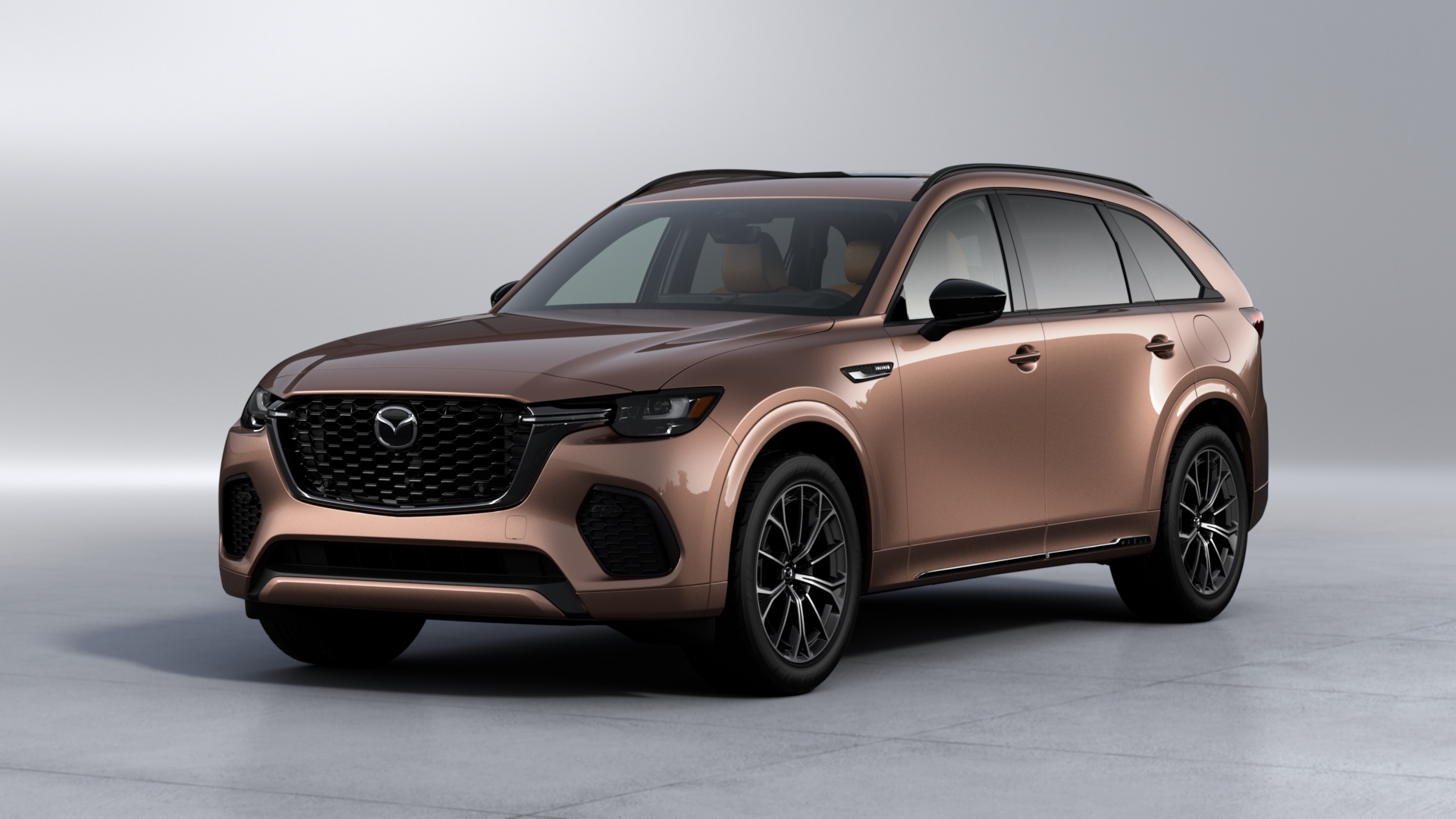
Decades ago, Mazda determined there was no sense in building cars for the mass market. Instead, it leaned in on its core strengths: building driver-oriented vehicles in every segment, prioritizing design and premium appointments in the process. Mazda has found success in this practice and doubled down with the new CX-70 crossover. Autoblog decided to take the brand’s most niche SUV and keep it around for a while to see how well it delivers on the premium, driver’s-car promise. Team Gillman Mazda tells you what they found.
The CX-70 is basically a CX-90 without the third-row seat. Other brands have 2-row versions of their mid-size 3-row SUVs, but usually sport some revised exterior sheetmetal to visually differentiate the two variants. Mazda, however, retained the CX-90's handsome, sculpted form when creating the CX-70. Both models are also the first recipients of Mazda's new turbocharged 3.3-liter inline-6, which produces at least280 hp @ 5000 rpm and 332 lb-ft of torque, peaking at 2,000 rpm.
The range-topping CX-70 S Premium, however – like the example Autoblog evaluated in its long-term test – offers even more power, delivering 340 horsepower and 369 lb-ft of torque when using premium fuel.
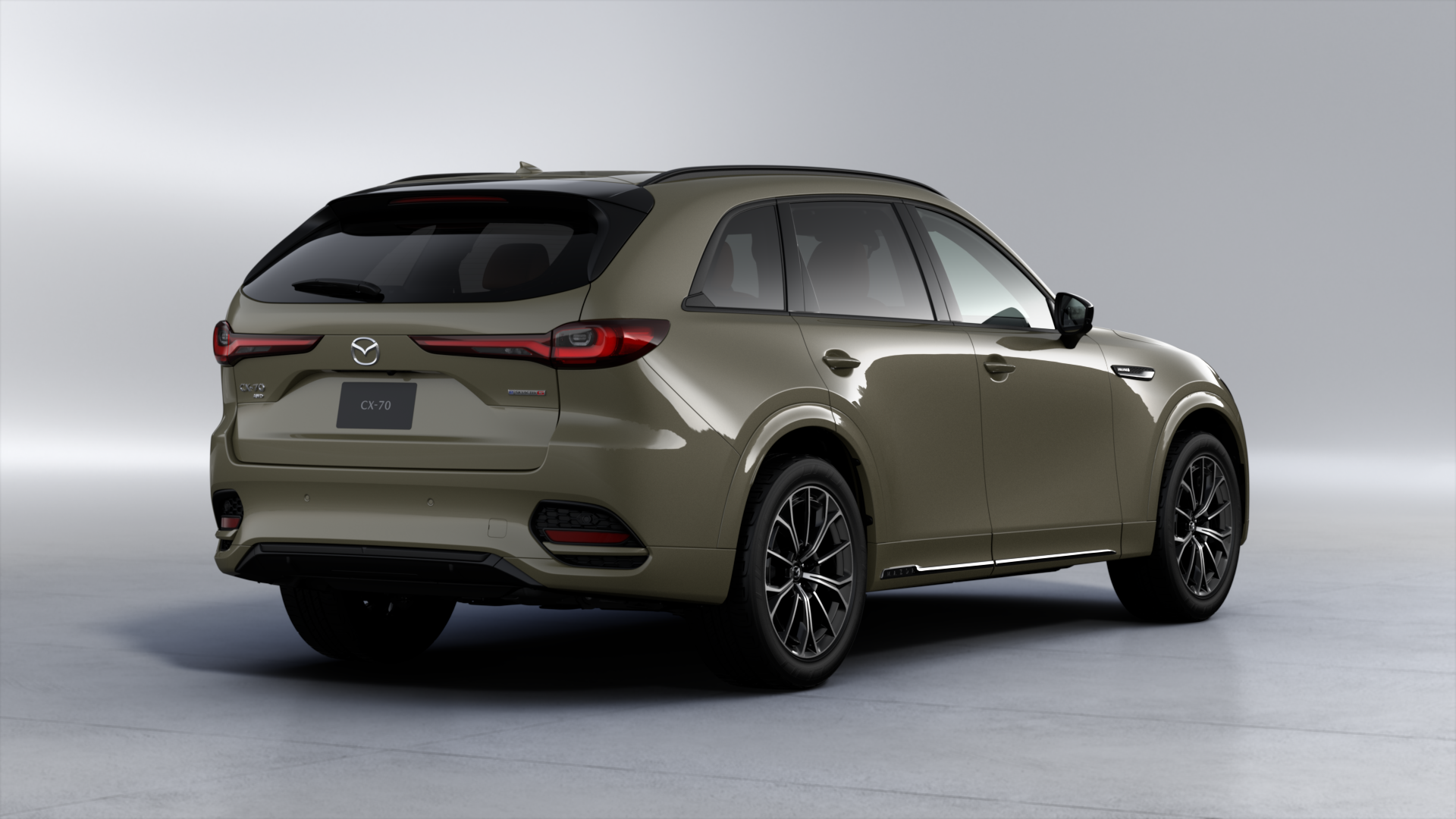
That is for most models, the range-topping S Premium Autoblog had for their long-term test was the Premium S with 340 horsepower and 369 lb-ft @ 2000 rpm, using premium fuel. In all cases, the engine is mounted longitudinally, placing the transmission further back in the chassis, reducing weight ahead of the front axle and, in turn, improving balance and turn-in response. The standard AWD system is also rear-biased, meaning it generally sends more power to the rear wheels, much like you see in high-performance AWD sports cars and sport sedans. The drivetrain also has a 48-volt mild hybrid setup, which uses stored energy to assist acceleration, particularly before the turbo fully spools up.
Autoblog found the CX-70 to be every bit the premium driver's crossover Mazda built it to be. “The engine note is excellent, providing a solid growl as you work your way up the rpm band. It never sounds strained, always offering up more power than you need, which makes it great for passing on the highway.” Editors continued: “the mild-hybrid system does an excellent job of filling in the torque gaps, especially during low-speed crawls.”
AutoBlog also mentioned how well the model delivers on handling. “The rear-biased AWD system remains the best in its class for driver engagement. The steering weight is heavy and provides high-speed stability that rivals that of European luxury competitors.”
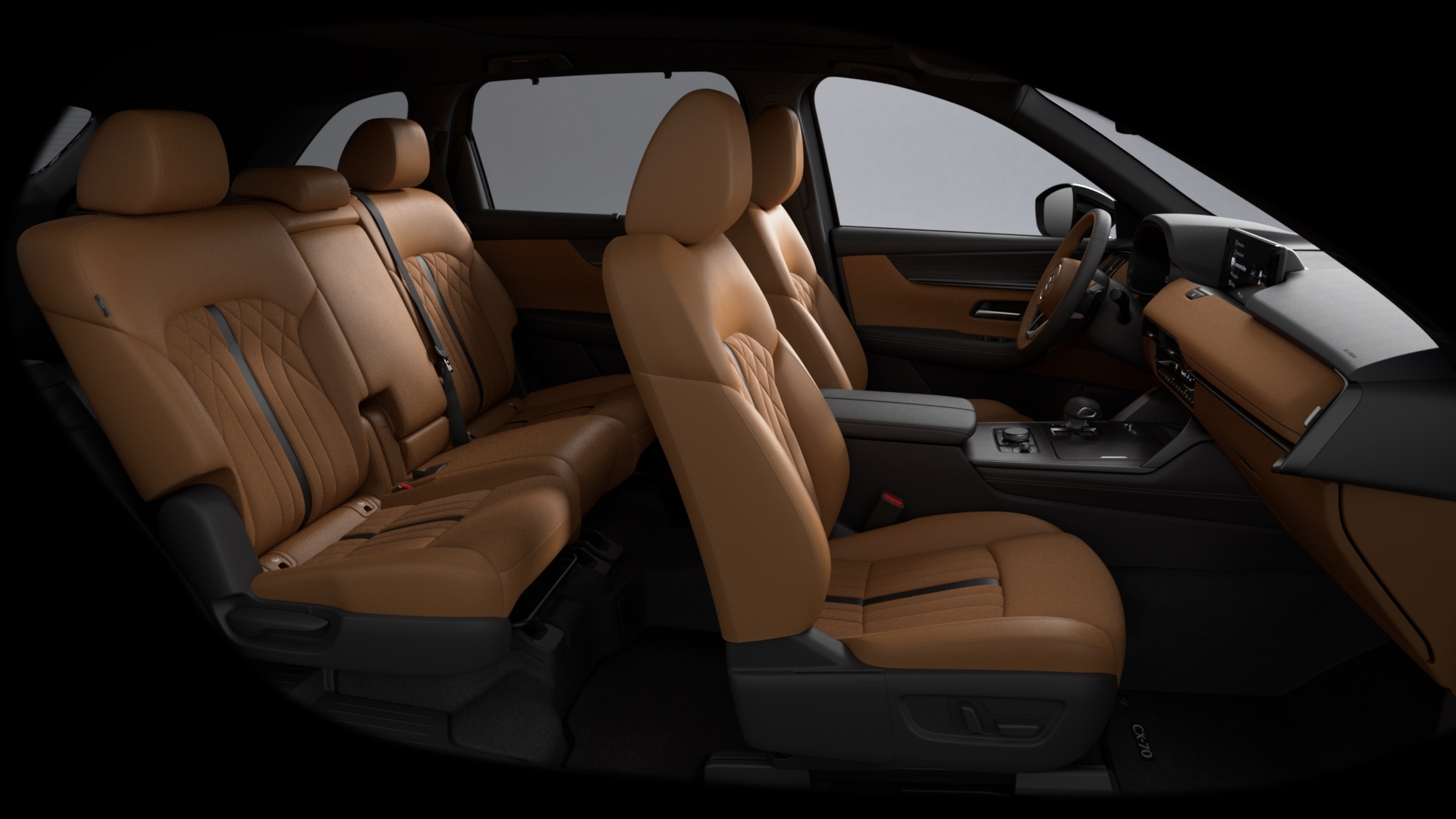
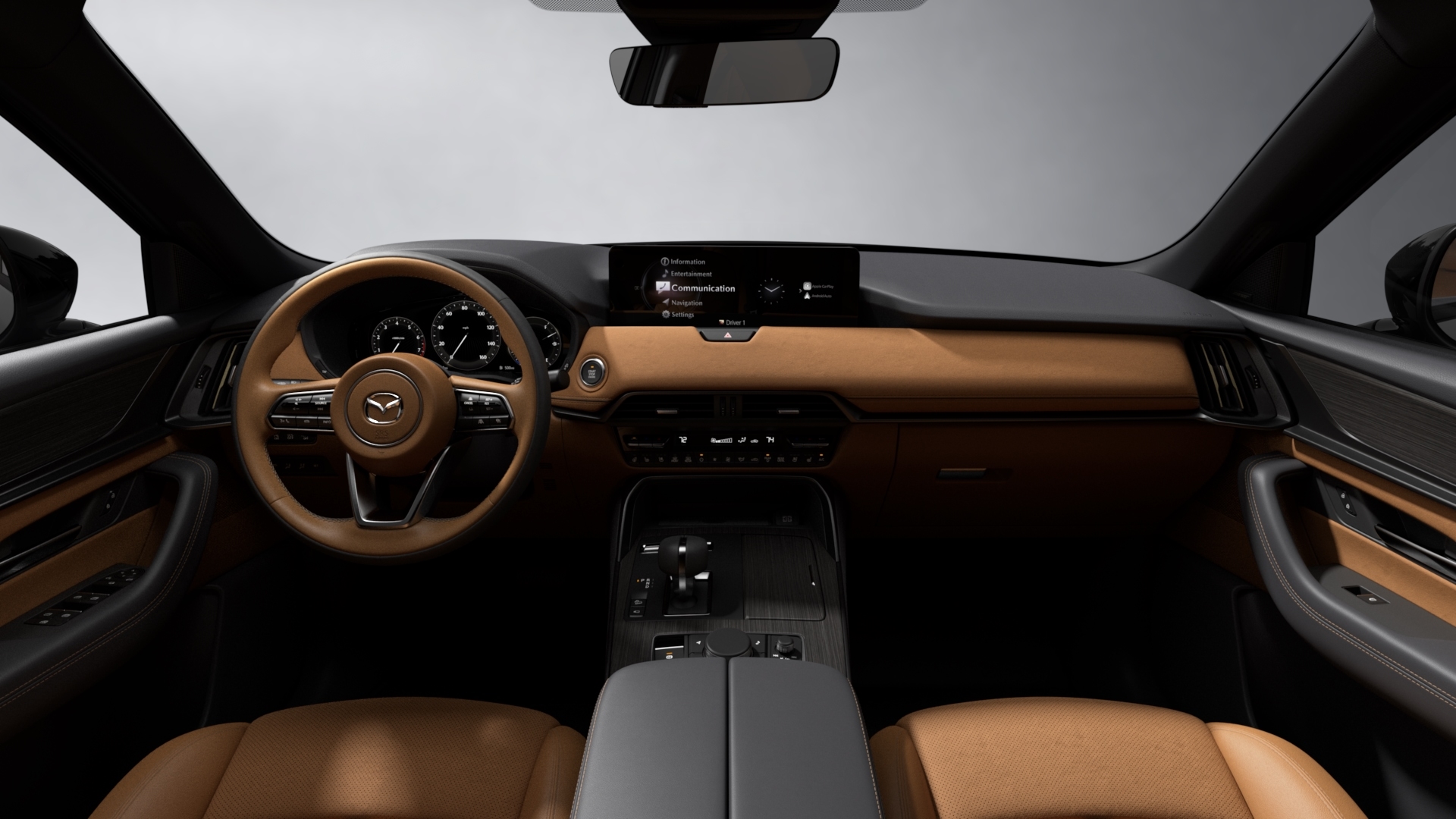
Of course, a mid-size SUV has to do more than put a smile on the driver’s face, and the CX-70 delivers here as well. The interior has an elegant less-is-more approach with the 12.3-inch center screen seemingly resting in a pocket in the center of the dash. Drivers have the option of using either the touchscreen or a rotary dial on the center console, and Mazda sensibly kept physical controls for the climate system.
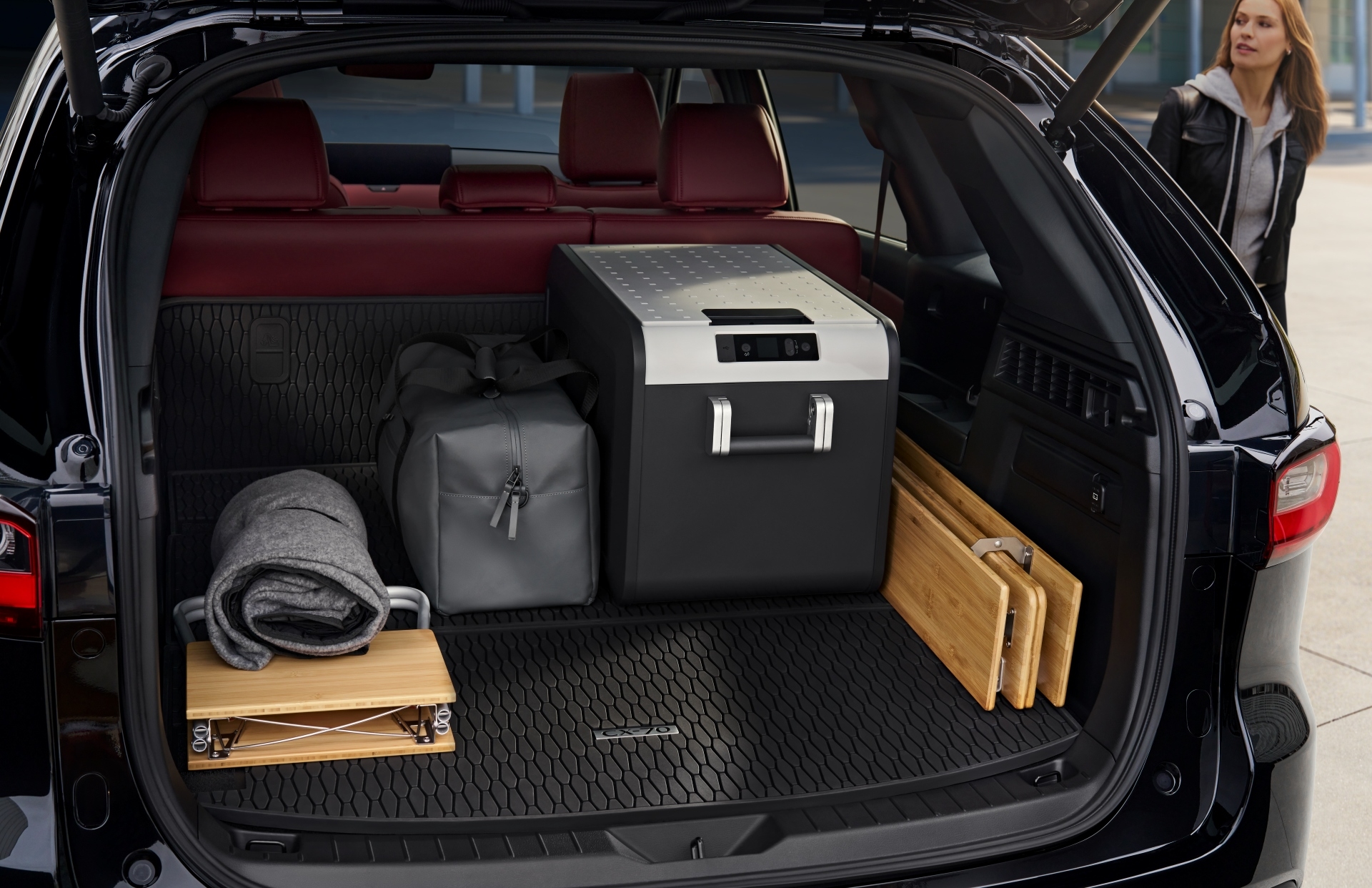
Removing the 3rd row while keeping the vehicle the same size allows for both a spacious rear seat, with 39.4 inches of legroom, and a large cargo area of almost 40 cubic feet (39.4) behind the seats, which expands to 75.3 cubic feet when the rear seats are folded down. There is also useful underfloor storage beneath the cargo floor, which is where the CX-90's third row would normally tuck into when folded away.
Starting at $44,280, with the top trim ringing in at $54,970, the CX-70 offers a lot of luxury-level engineering, style, and cabin comfort at a mainstream price. Autoblog summarizes its experience with this: “It is an exceptionally solid car to drive and feels meticulously put together, hitting every mark of the premium experience Mazda is aiming for. It also happens to be a head-turner.”
If you have no need for a third seat but appreciate style, driving dynamics and space, the CX-70 is waiting for your test drive at Team Gillman Mazda.